A Monarch Between the Desert and the Empire: The 14th Ughaz of Issa
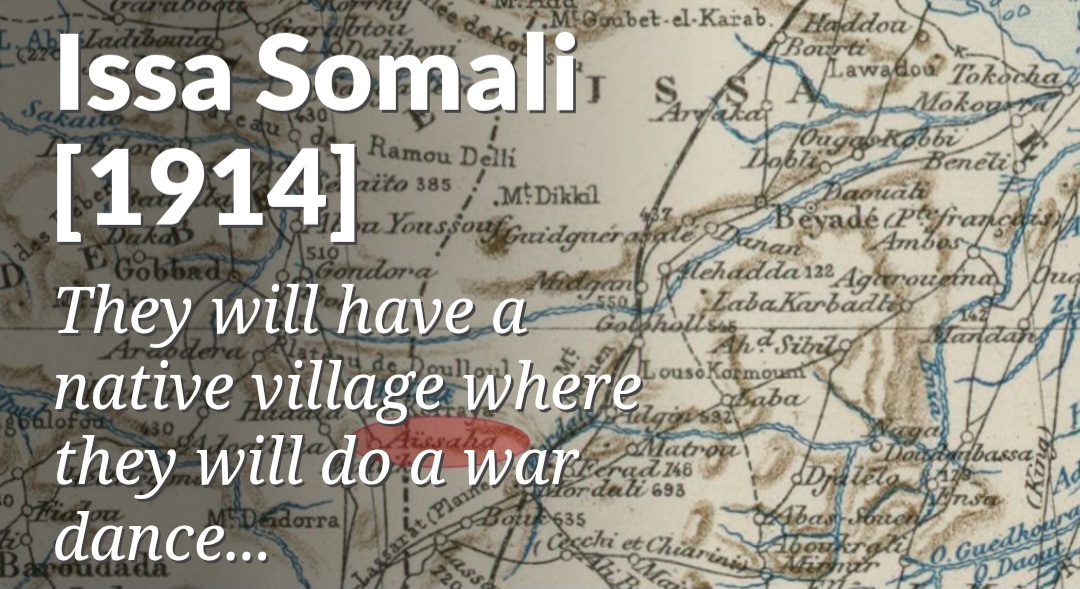
In the second half of the nineteenth century, when the Horn of Africa was swept by imperial ambitions, trade rivalries, and the slow encroachment of colonial borders, there emerged from the plains of the Issa a figure of remarkable poise and influence, Ughaz Roble Farah I, remembered by travelers and chroniclers alike as “The Rain Prince.” His leadership, poised between pastoral wisdom and political acumen, reflected the complex equilibrium of a society balancing between tradition and transformation.
The Issa Somali, a branch of the larger Dir confederation, had long commanded key caravan routes linking Zeila, Harar, and the Ethiopian highlands. By the mid-19th century, this position endowed them with both opportunity and peril. Their leader, the Ughaz, functioned as a mediator between warring tribes, trading powers, and spiritual forces. It was in this volatile yet vibrant environment that Ughaz Roble Farah rose to power, shaping the Issa polity into a cohesive and diplomatically recognized authority.He was not merely a clan chief; he was a statesman in the fullest African sense, the custodian of peace, guardian of trade, and the rain-bringer upon whose fortune the prosperity of the Issa depended.
Background: Rise of a Sovereign Among the Issa.
Ughaz Roble Farah I was born around 1820, at a time when the Issa were consolidating their influence along the western approaches to Zeila and the caravan route to Harar. His rise to the esteemed position of Ughaz (chief or monarch) marked the maturation of Issa political organization, in which lineage, charisma, and divine sanction intertwined. The Italian explorer Antonio Cecchi, who traversed Zeila and the Ethiopian frontiers in the 1870s, provides one of the most vivid accounts of the Ughaz’s prestige. Cecchi described him as “a revered and eloquent leader, capable of rallying forty thousand warriors in times of conflict, commanding both respect and absolute loyalty.” This testimony speaks to the magnitude of his influence for the Issa, dispersed across a vast and often hostile terrain, could only be united by a ruler whose authority extended beyond lineage into legend.
Diplomacy, Tribute, and Power: The Ughaz and Menelik II
Among Ughaz Roble’s most striking diplomatic achievements was his relationship with the future Emperor Menelik II of Ethiopia. In a rare acknowledgment of Somali sovereignty in the interior, Menelik is said to have paid tribute to the Ughaz, ensuring the safe passage of his caravans and envoys through Issa territories.This tribute, or symbolic as much as material represented more than mere protection money; it was an affirmation of mutual respect between two indigenous powers at a time when both were navigating the encroaching pressures of European imperialism. The Ughaz’s control over the caravan routes that linked Abyssinia to the Red Sea made him a regional power whose friendship was essential and whose enmity could paralyze trade.
In 1876, the Ughaz’s influence reached its ceremonial zenith when he was received in Zeila with unprecedented grandeur. The Pasha’s officials and Arab merchants came out to Tokhoshi, just outside Zeila, to greet him. Cecchi recounts that the reception was so splendid that even the Ottoman officials stationed there regarded it as a royal event. The Ughaz’s attire distinguished him from other leaders, he was adorned with a ceremonial garment, carried a royal umbrella, and wore numerous amulets and talismans symbolic of his divine protection and authority. On that same occasion, it was he who imposed a tribute of fifty thalers and a fine piece of cotton cloth upon the Pasha’s expedition, which was immediately paid — a gesture that testified to his recognized sovereignty and economic leverage in the region.
The Seat of Power: Jaldessa, the Issa Capital
The seat of Ughaz Roble Farah’s court was established at Jaldessa, a settlement of strategic importance on the caravan route between Zeila and Harar. Jaldessa served as both a political center and a symbol of Issa consolidation in the highland frontier.In 1875, when Egyptian forces under the Khedivate of Egypt invaded Harar, they passed through and occupied Jaldessa, leaving a garrison there. Despite this intrusion, the town remained closely tied to the authority of the Ughaz, who continued to exercise influence over its affairs. It was in Jaldessa that the Ughaz hosted travelers, traders, and foreign envoys, a living court in the midst of a desert kingdom.An evocative photograph from the late 19th century, taken by early European visitors, depicts an Issa Somali guard standing outside the abode of Ughaz Robleh Farah at Jaldessa, a scene that captures the quiet dignity and martial discipline of his household.
The Portrait of a Monarch: Descriptions by European Explorers
The European travelers of the late 19th century, for all their ethnographic distortions, left invaluable portraits of African rulers who defied the colonial gaze. Cecchi’s description of Ughaz Roble Farah is particularly vivid: “The great chief is called Ughaz-Robly-Farah, also called Ugas-Robli; he is tall, with slender limbs like all his countrymen; he has a bright, alert eye, a flattened nose, and a face marked by smallpox. He wears Turkish trousers, covers his shoulders with a rough canvas mantle, and wraps his head with a turban over a coarse tarbush, in whose folds are hidden papers and amulets. His manners are kind; in speech he becomes oratorical and imposing, and he jokes freely with his subjects and even with the boys who graze camels. ”This passage not only humanizes the Ughaz but also situates him within the hybrid aesthetic of a frontier ruler, a leader at once traditional and cosmopolitan, blending Ottoman attire with Somali charisma. His amulets and papers, likely protective charms and documents of correspondence that suggest a ruler conversant in both spiritual and administrative realms.
Similarly, the Austrian explorer Philipp Paulitschke, who journeyed through Somali and Oromo lands in the 1880s, offered another remarkable portrayal: “The Ugas wished to see us immediately. We found him standing before his tent — a giant man with a deep black complexion, a narrow and severe face, sleepy eyes, and high cheekbones. Dressed in a snow-white coat, he held a small stick in his right hand: this was His Highness, Ugas Roble Farah — ‘The Rain Prince. ’”Paulitschke’s epithet captures what Somali oral tradition had long believed: that the Ughaz’s spiritual legitimacy was bound to rainfall, and his reign was blessed when the rains fell, and imperiled when they failed.
Critical Reflection: The Symbolism of the Rain Prince
Ughaz Roble Farah’s political success cannot be understood apart from the cosmology of his people. The Issa regarded their Ughaz as the intermediary between heaven and earth. When rains failed or famine struck, his authority was called into question, not as a failure of governance, but as a lapse in cosmic balance.To call him “The Rain Prince” was to recognize both his might and his fragility. It was to understand that leadership among the Issa was not a fixed throne but a moral covenant between ruler, people, and the unseen powers of the sky. The Ughaz’s eloquence, celebrated by Cecchi, was thus not mere rhetoric but it was ritual speech, the language of one who governed through persuasion, wisdom, and spiritual legitimacy rather than coercive power. By the time of his later years, Ughaz Roble Farah I had become a legend across the Somali plateau, a monarch whose name was invoked in the same breath as Menelik II and Pasha of Zeila, his contemporaries in the theatre of Horn politics. His rule epitomized a distinctly African form of sovereignty: mobile yet stable, oral yet diplomatic, spiritual yet pragmatic.
From Jaldessa to Zeila, his name carried weight; his authority, while shaped by the traditions of the Issa, resonated across borders drawn later by colonial cartographers. To the explorers, he was an object of fascination; to his people, he was the embodiment of rain, eloquence, and justice.And so, in the memory of the Issa, Ughaz Roble Farah I remains not merely a historical figure, but a symbol of that fleeting era when Somali rulers negotiated their destinies on their own terms between desert and empire, between drought and downpour.
Source book by:- Antonio Cecchi his book (Da Zeila Alle frontiere del kaf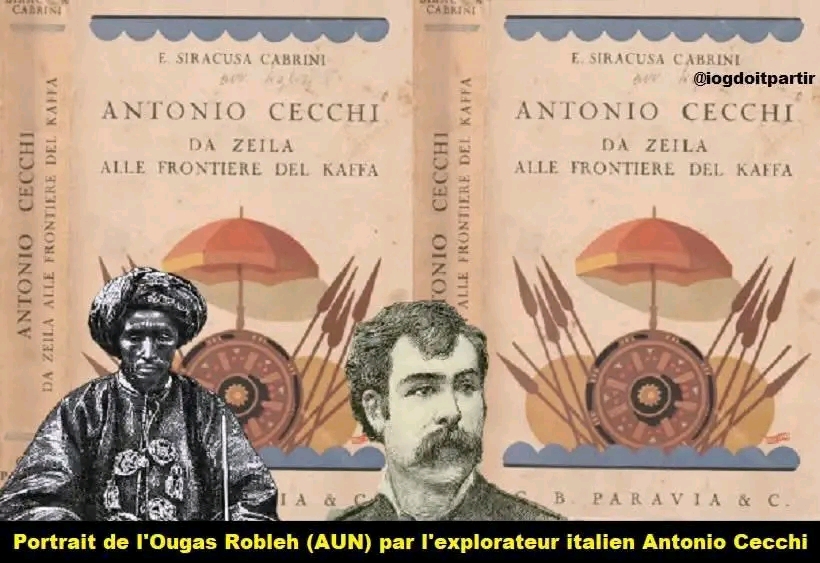 fa)
fa)
Writer by historian Khadar jaambiir Egeh
Zeila Heritage waa madal kayd iyo dhaqan-dhawr ah oo u heellan ilaalinta, ururinta, iyo faafinta taariikhda, dhaqanka, iyo xusuusta guud ee beesha Ciise iyo deegaanadeeda. Waxyaabaha lagu soo bandhigo waxay ku dhisan yihiin warbixinno afeed, xusuus-dhaqameed, xeer dhaqameed iyo qoraallo taariikheed oo la keydiyey si jiilalka mustaqbalka loogu gudbiyo.