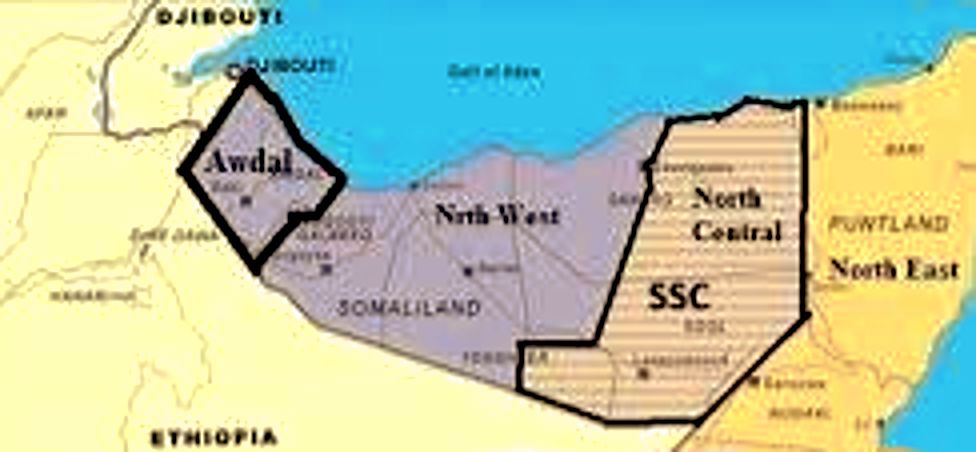
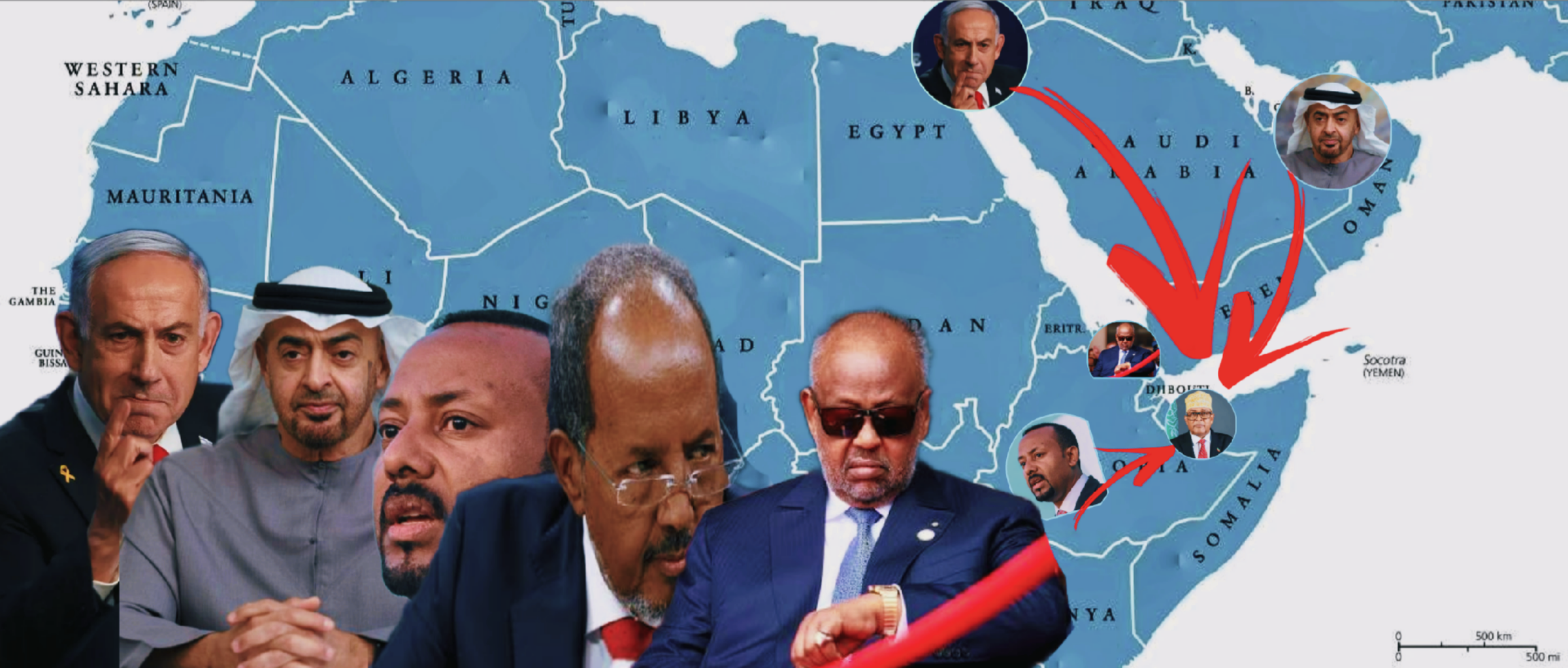
Somaliland was founded on a delicate balance: a compact between communities of the northwest—the central Isaaq majority, the western clans of Awdal, and the minorities among them. For three decades, coexistence and mutual respect helped sustain a fragile social order. Today, that order has collapsed beyond repair. The social fabric connecting Somaliland’s western communities—particularly the Issa and Gadabursi—has been shredded, perhaps permanently.
The current crisis is not a simple political dispute. It is the culmination of years of rising hostility, denial of clan boundaries, and state mismanagement. The level of hate, mistrust, and open rivalry now seen between the Issa and Gadabursi has reached a point where peaceful coexistence appears increasingly impossible.
The Targeting of Xeer Issa Revealed Deep Animosity
The attack on the Issa cultural event—UNESCO’s recognition of Xeer Issa—did not begin in Zeila. It began earlier, through coordinated misinformation and propaganda designed to delegitimize Issa identity itself. The lies circulated about Xeer Issa were almost entirely produced and spread by prominent Gadabursi elites, who escalated the dispute beyond clan boundaries and into full-scale cultural warfare.Instead of celebrating a Somali contribution to global heritage, a segment of Gadabursi leadership used it as a pretext to question the Issa community’s right to exist, celebrate, or gather in their own traditional territory. This is unprecedented in Somali culture: no clan has the authority or moral basis to deny another clan’s cultural right on its own land.
Clan Boundaries Are Clear—Except for Those Who Choose to Ignore Them
Every Somali clan, across Somaliland, Somalia, Djibouti, and Ethiopia, has defined and mutually recognized clan boundaries (deegaan and daaqsin). These limits are deeply embedded in Somali customary law. Even sub-clans have boundaries among themselves.The Issa–Gadabursi boundary is well-known. Zeila, the center of the current dispute, is located roughly 130 kilometers within Issa deegaan, far from any shared grazing zones. The truth is simple:
The Gadabursi claim over these areas has no historical, cultural, or pastoral foundation. It is a manufactured political claim wrapped inside a cultural dispute. And Somaliland’s government has failed to correct it. A State Manipulated for Tribal Advantage Gadabursi elites effectively weaponized the Somaliland government to achieve their goals:
creating confusion around Xeer Issablocking an approved cultural eventmanufacturing territorial claimsspreading hostility against the Issa community The animosity has now permeated nearly every layer of Gadabursi public life—politics, academia, religious institutions, and social media. Individuals ranging from MPs like Mohammed Abib to figures such as Abdirahman Bayle, Abdirahman Saylici, Prof. Abdi Samatar, and Ahmed Ismail Samatar have contributed, directly or indirectly, to an environment of hostility. Some mosques even echoed this rhetoric, deepening the divide. Meanwhile, social media activists openly called for violence against Issa women and children in Borama—an alarming indicator of how far the hatred has spread.
Government Leaders Escalated Instead of Cooling Tensions
Instead of calming the situation, Somaliland’s top leadership poured fuel on the fire. President Abdirahman Ciro publicly declared: “As president, I stopped the Xeer Issa event in the interest of my people and the security of the country.”The implication is unmistakable: Issa people are no longer considered part of “his people.”A president who excludes an entire community from the national identity and ties their cultural rights to threats against “security” opens the door to far worse—state-sanctioned discrimination, mass violence, or even ethnic cleansing.The former Minister of Information, Ahmed Yasin, reinforced this hostility when he called the cancellation of the Issa event a “sweet decision,” while describing any approval of the event as “the bitter decision.”Two former presidents also publicly supported the suppression of the Issa event for the “interest of Somaliland,” signaling an alarming political consensus against one of the country’s founding communities.Somaliland’s Social Contract Has BrokenThe cumulative effect is devastating:trust between Issa and Gadabursi is goneclan boundaries are openly deniedhatred is normalizedpolitical neutrality of the state has evaporatedand the very idea of a multi-clan Somaliland is in crisisThe relationship between the Issa and Gadabursi—once the last remaining example of western Somaliland’s cohesion—is now beyond repair. The hostility has reached cultural, political, and religious levels. With no functioning mechanism in Somaliland to arbitrate serious boundary disputes, the region is on the brink of a conflict that could last decades.Somaliland is no longer a shared project.It is becoming a fragmented landscape of rival clans competing for survival.
Unless bold, honest, and transparent steps are taken, the slide toward permanent separation—and possibly open conflict—may become unstoppable.
Zeila Heritage waa madal kayd iyo dhaqan-dhawr ah oo u heellan ilaalinta, ururinta, iyo faafinta taariikhda, dhaqanka, iyo xusuusta guud ee beesha Ciise iyo deegaanadeeda. Waxyaabaha lagu soo bandhigo waxay ku dhisan yihiin warbixinno afeed, xusuus-dhaqameed, xeer dhaqameed iyo qoraallo taariikheed oo la keydiyey si jiilalka mustaqbalka loogu gudbiyo.