Zeila, an ancient port in the Horn of Africa, has long been a hub of trade and cultural exchange.
During the Middle Ages, the Jewish traveler Benjamin of Tudela linked Zeila with the Biblical Havilah, though modern scholarship identifies it more likely as Avalites, mentioned in the Periplus of the Erythraean Sea and by Ptolemy (Benjamin of Tudela, 1907; Schoff, 1912; Ptolemy, 1991). Following the Hijrah, Zeila became one of the earliest Islamic centers in the region, later serving as the capital of the Adal Kingdom and the Ifat Sultanate, and reaching its peak in the 16th century. Historically, the city was fortified with five gates and hosted a cosmopolitan population, including Somalis, Afars, and Arabs. and Issa clan mainly inhabit the area (Drake-Brockman, 1912; Walsh, 1932; Swayne; 1895 Richard Burton 1910).
Geography and Strategic Significance.
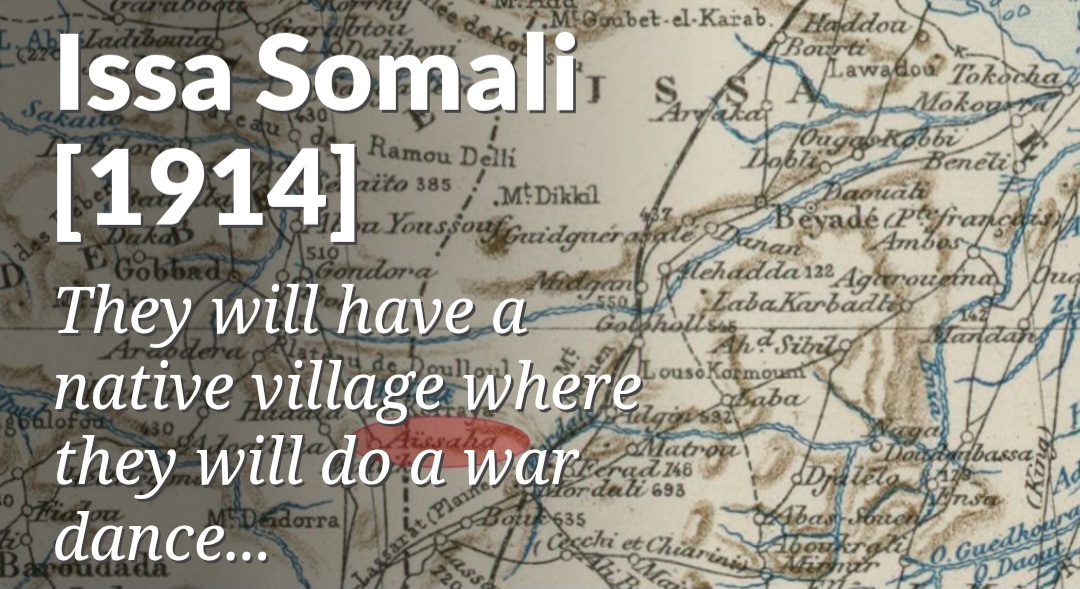
Zeila’s surrounding countryside, particularly the Dunkali plains and the Zeila–Harar caravan route, has historically been under the influence of the Issa clan, also known as the Black Aysa. Walsh (1912) notes that Zeila “had always been used as the route by which Egyptian garrisons occupied the towns of the Eastern Mudirieh of the Sudan” and that the Black Aysa “dominated the caravan road from Zeila to Harar, attacking and pillaging caravans not strong enough to resist them” (p. 348).
In Chapter IV, “The Somal, Their Origin and Peculiarities,” Burton examines the Somali tribes surrounding Zeila, including the Issa. He provides ethnographic observations regarding their lineage, origin myths, and social customs. Burton characterizes the Issa as “a fierce and turbulent race” who “occupy the country immediately to the south of Zayla,” observing that “their forays frequently threaten the safety of the town.
Seventeen Trips through Somaliland “The tribe occupying the coast round Zeila is the Esa, and those about Bulhar and Berbera are the Habr Awal, and farther east Habr Toljaala.” The book is titled British Somali Land (1912) and deals broadly with geography, ethnography, history within British Somaliland by Ralph E. Drake-Brockman was a British colonial administrator and medical officer who authored British Somaliland, a comprehensive account of the region published in 1912. His work provides valuable insights into the geography, ethnography, and daily life of the Somali people in the early 20th century.
Brockman conducted detailed research on the Somali clans, documenting their territories, wells, and grazing lands—particularly focusing on the Issaq, Gadabursi, Harti, and Issa clans. In his survey, he carefully distinguished the grazing areas of the Issa and Gadabursi, specifying which wells and valleys were traditionally used by each clan. Élisée Reclus’s book The Earth and Its Inhabitants: Africa – North-East Africa (1886), he wrote that “the Issa, although nominally tributaries of the Egyptian Government, are practically independent, and their chief has to be subsidized to protect the caravans travelling between the mountains and zeila.
Martial Culture and Leadership.
The Issa were known for their bravery and martial skill. Swayne (1895) described the Esa as “the bravest of any of the Somali tribes; they seldom or never use light throwing-spears, but run up and stab at close quarters with the large, heavy, broad-bladed spear” (pp. 1–28). Leadership within the clan was formalized through the Ughaz system, in which a new leader was recognized in ceremonial traditions, such as the shaving of his head at the historical Ughaz tree (Walsh, 1912, p. 354).
The clan’s customs extended to marriage and social status: “The men of this tribe were not supposed to marry until they could wear in their hair a feather which denoted that the wearer had killed an enemy” (Walsh, 1912, p. 348). Inter-clan conflicts and revenge were also common; Swayne (1895) recounts: “The Esa attacked some Gadabursi and killed one of them, and in leaving I passed a party of young men going out to try and find an Esa to kill, and so square off the score” (p. 15). The Issa clan dominated the trade routes linking Harar with Berbera and Zeila. Their long-standing trade and farming relations with the other communities in horn of africa since the 15th century led to cultural and ethnic fusion, forming Somali groups like the Girri-Jarso and Girri-Babillee. In the Zeila region, the Issa protected merchants and their goods, collecting taxes in return. This system strengthened Somali institutions and established the Abban (tribal chief) as a key figure responsible for trade security and community welfare
Interactions with Foreign Powers.
Zeila’s rulers historically maintained a pragmatic relationship with the Issa, subsidizing them to protect trade routes. Walsh (1912) explains, “A newly appointed Ughaz was to pay his respects first of all to the Governor of Zeila, who on his side was always anxious to propitiate the King of the Black Aysa, in the hope that he would restrain his clansmen from molesting all caravans on the Zeila–Harar road” (p. 348). These arrangements reflect the Issa’s influence over regional commerce and their strategic importance to Zeila’s governance. In the French travel magazine Le Tour du Monde, first published in January 1860, the assassination of Henri Lambert, the French consular agent at Zeila, is recounted in connection with the Issa Agency. Zeila’s strategic importance on the Gulf of Aden is further underscored by this event, which occurred in June 1859. The operation was reportedly orchestrated under the direction of Sharmarke Ali Salih, the leading political authority in Zeila at the time, and carried out by a crew composed almost entirely of Issa men from the town. Those named in the account include Abdillahi bin Edlie (the Nacouda, or captain), Robly Gedi Edlie, Assowah Gedy, Gely Gedy, Farah Edlie, Ali Sanguely, Farah Ouroueni, El Terre, Durbadi, Wahbirrie Bahdoon, Farah Roblie, and Mahomed Abouke
Conclusion.
The historical evidence from Swayne, Walsh, and other sources demonstrates that Zeila was not only a commercial hub but also a center of complex social and political organization. The Issa/Black Aysa clan’s martial culture, leadership traditions, and strategic dominance of trade routes shaped both local governance and regional interactions. Today, Zeila remains inhabited by the Issa, preserving cultural and historical ties that stretch back centuries.
Resources Book. ⤵️
Aitchison, C. U. (Comp.). (1910). A collection of treaties, engagements and sanads (Vol. 11). Government of India.
Benjamin of Tudela. (1907). The itinerary of Benjamin of Tudela (M. N. Adler, Trans.). Oxford University Press.
Drake-Brockman, R. E. (1912). British Somaliland. Macmillan & Co.
Ptolemy, C. (1991). Geography (E. L. Stevenson, Trans.). Dover Publications.
Richard, F. B. (1910). First footsteps in East Africa. Macmillan & Co.
Schoff, W. H. (Trans.). (1912). Periplus of the Erythraean Sea. Longmans, Green & Co.Swayne, H. G. C. (1895). Seventeen trips through Somaliland. Macmillan & Co.Walsh, L. P. (1912). Under the flag: And Somali coast stories. Macmillan & Co.Le Tour du Monde. (1860). Le Tour du Monde.Reclus, É. (1886). The Earth and Its Inhabitants: Africa – North-East Africa (A. H. Keane, Ed., Vol. 1, p. 202). New York: D. Appleton and Company
Zeila Heritage waa madal kayd iyo dhaqan-dhawr ah oo u heellan ilaalinta, ururinta, iyo faafinta taariikhda, dhaqanka, iyo xusuusta guud ee beesha Ciise iyo deegaanadeeda. Waxyaabaha lagu soo bandhigo waxay ku dhisan yihiin warbixinno afeed, xusuus-dhaqameed, xeer dhaqameed iyo qoraallo taariikheed oo la keydiyey si jiilalka mustaqbalka loogu gudbiyo.